Meet the Team
Introducing the Child Vision Lab team! We're a diverse group of researchers specializing in psychology, neuroscience, and ophthalmology. Our passion lies in unraveling the mysteries of childhood vision development.
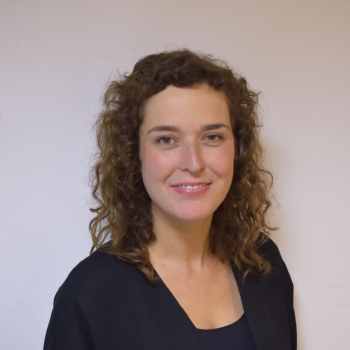
Prof Tessa Dekker
Principal Investigator
I am a cognitive neuroscientist studying how we learn to see. We investigate how the brain integrates visual information with other types of input to build a coherent experience of the world, how these processes are influenced by eye disease, and by groundbreaking treatments that can reverse sight loss.
I undertook my undergraduate degree in cognitive neuroscience at the University of Amsterdam. In 2012, I obtained my PhD, funded by an EU Marie Curie Centre of Excellence Grant, at the Centre for Brain and Cognitive Development at Birkbeck, University of London, under the supervision of Prof. Marty Sereno, Prof. Denis Mareschal, and Prof. Mark Johnson.
My PhD focused on object processing in the developing brain in childhood, using functional MRI. I started my next postdoc with Dr. Marko Nardini at the UCL Institute of Ophthalmology, studying the development of sensory and motor integration, and its neural basis.
In January 2016, I became a Research Fellow at the UCL Division of Psychology and Language Sciences on an ESRC Future Leaders Fellowship, followed by a Moorfields Eye Charity Career Development Award. Since 2020, I have been working as an Associate Professor based 50/50 at Experimental Psychology at PALS, and at the Institute of Ophthalmology, where I lead the UCL Child Vision Lab.
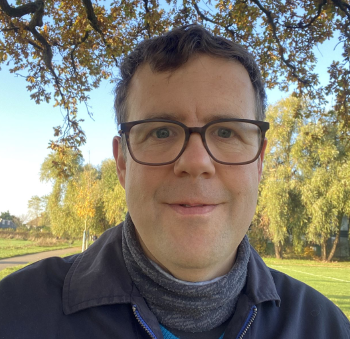
Dr Michael Crossland
Senior Research Fellow
I am a Senior Research Fellow at the UCL Institute of Ophthalmology and a specialist optometrist in low vision at Moorfields Eye Hospital.
My research interest is in the measurement and rehabilitation of vision impairment, with particular reference to the wellbeing and mental health of adolescents and young adults with low vision.
I have written more than 50 peer-reviewed journal publications and am co-author of the textbook Low Vision: Principles and Management (Dickinson, Trillo & Crossland, Elsevier, 2023). I live in West London with my family and two disobedient cats.
Dr Roni Maimon-Mor
Postdoctoral Researcher
I am a Research Fellow on a Moorfields Eye Charity Career Development Award.
My research interest is in neuroplasticity, specifically the effects of sensory deprivation and restoration in clinical populations. I study visual augmentation, visual impairment, and the effects of sight-rescue therapy as a brain adaptation process. Investigating how these unfold at different levels of computations, processes and behaviours.
I have a software engineering and a cognitive neuroscience background. In the past as part of my PhD I worked on neuroplasticity of deprivation and augmentation in sensorimotor system. Working with amputess, prosthetics and other robotic devices.
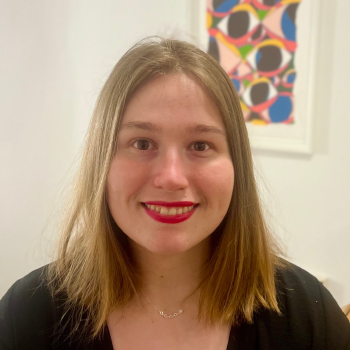
Dr Ana Rozman
Postdoctoral Researcher
I am a colour vision neuroscientist, interested in how our visual system interacts with the information from the environment to allow us to perceive the world in colour. I am currently researching how our interactions with the environment in early life shape our colour perception in the context of sight rescue as well as healthy development. I use a range of methods to address these questions, mostly specialising in EEG and behavioural psychophysics.
I have previously been a postdoctoral research fellow at the University of Sussex, working with Dr Jenny Bosten on project COLOURCODE, looking for signatures of colour mechanisms in the brain. I completed my PhD with Dr Jasna Martinovic at the University of Aberdeen with a thesis titled ‘Neural Mechanisms of Saturation’.
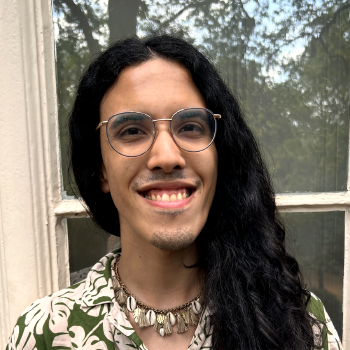
Dr Hugo Chow-Wing-Bom
Postdoctoral Researcher
I joined the Child Vision Lab in 2017 as a Research Assistant and began my PhD in 2021. My background is in Neuroimaging and Vision Perception, and my research interest focuses on developing and optimizing behavioral and brain measures of visual function for both healthy and visually-impaired populations.
My PhD research centres around on investigating anatomical and functional changes beyond the retina in patients with a visual impairment, principally Leber Hereditary Optic Neuropathy (LHON), and how these neural changes relate to visual function. LHON is a rare inherited retinal disease caused by mitochondrial dysfunction, leading to rapid degeneration of retinal ganglion cells and severe symptoms like central vision loss, significantly impacting patients’ quality of life. While there is currently no cure for LHON, promising gene therapies have emerged to potentially save and restore vision in these patients. Through a combination of various MRI modalities (fMRI, qMRI, DTI), psychophysics, and biophysical modeling, I aim to gain a more comprehensive understanding of the neural mechanisms underlying LHON beyond the study of the retina alone. This research has the potential to inform gene-therapy treatments and contribute to better outcomes for LHON patients and other eye conditions.
Other area of interest includes the use of Virtual Reality and Augmented Reality to develop new tests for assessing vision and recovery in patients, before and after sight-rescuing interventionsm, as well as developing other types of neuroimaging methods (e.g., EEG, MEG).
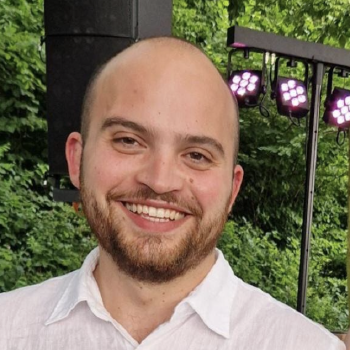
Dr Marcus Daghlian
Postdoctoral Researcher
I started my post-doc at the Child-Vision Lab in January 2026. My research concerns how we can use neuroimaging to understand visual processing in patients with visual impairments. I’m interested they way the brain responds to changes in the eye, whether this leads to adaptation and whether adaptation has consequences for sight rescuing therapies.
My background is in Computational Neuroscience, specifically with a focus on vision and visual perception. I undertook my PhD in the Netherlands with Dr Serge Dumoulin and Dr Frans Cornelissen; exploring ways to measure visual function with fMRI and computational models.
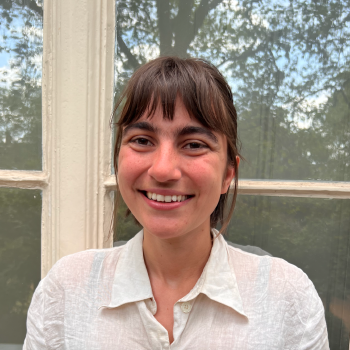
Georgia Milne
PhD Student
I’m a final year PhD student at the Child Vision Lab, supervised by Dr Tessa Dekker, Dr John Greenwood and Dr Peter Kok.
I’m currently researching how past experiences and expectations can shape perception, and how this process develops across childhood and adolescence. I use hard-to-recognise images (two-tones) and speech recordings (noise-vocoded speech) to investigate how prior information can reshape visual and auditory perception of these stimuli in adults and children, and use functional MRI to assess what activity in the brain encodes this subjective recognition.
My research interests also include metacognition, sensory integration, consciousness and machine learning models.
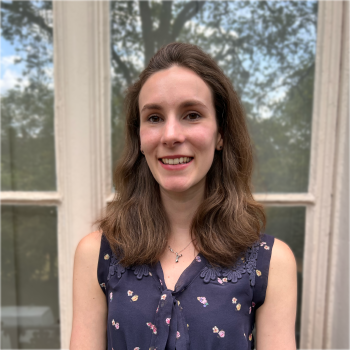
Kim Staeubli
PhD Student
I am a PhD student supervised by Dr Tessa Dekker and Prof Mariya Moosajee. After completing my BSc in Psychology at the University of Zurich in 2021, I went on to undertake my MSc in Clinical Neuroscience at University College London before joining the Child Vision Lab in 2022.
My research focuses on understanding how vision loss impacts the structure and function of our brain. My project uses advanced neuroimaging techniques, such as MRI, fMRI, and EEG, to explore the neural changes associated with inherited retinal disease, with a particular focus on retinal disease caused by mutations in the CRB1 gene. With this research, I hope to shed light on how the visual system develops and how it adapts to altered sensory input and provide insights into the efficacy of treatments for retinal disease.
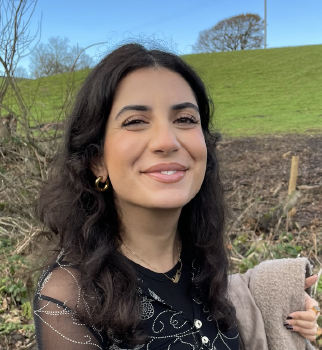
Oris Shenyan
PhD Student
I am a second year PhD student on the London Interdisciplinary Doctoral Programme. I achieved a first-class BSc in Medical Sciences in 2018 and an MSc in Cognitive Neuroscience with distinction in 2019 from UCL. Prior to starting my PhD at the Child Vision Lab, I worked as an economist within the health sector.
My PhD is supervised by Dr Tessa Dekker, Dr Jeremy Skipper and Dr John Greenwood. I use behavioural methods and fMRI to understand the neural processes underpinning visual hallucinations induced by experimental and pharmacological methods. Specifically, I am interested in the different types of visual hallucinations that people experience, how visual hallucinations differ from normal vision and imagination, and what makes some individuals more hallucinatory prone than others.
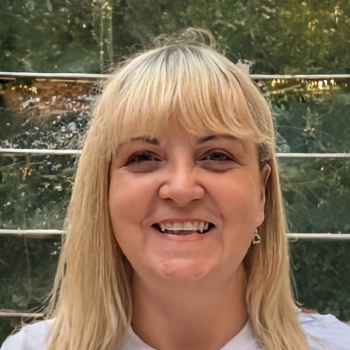
Rachael Canavan
PhD Student
I am a PhD student supervised by Dr Michael Crossland, Dr Tessa Dekker and Dr Marc Tibber. I achieved a first-class BSc in Psychology, Counselling and Therapies at the University of Bedfordshire in 2019. I went on to complete an MSc in Clinical Child Psychology with distinction at Anglia Ruskin University in 2021. I subsequently attained a Post Graduate Diploma in Brief Evidence-Based Psychological Treatments for the Education Setting with merit at Reading University in 2022. I have worked in the areas of child mental health and developmental psychology as an Educational Mental Health Practitioner and Assistant Educational Psychologist. I joined the Child Vision Lab in 2023.
My research focuses on the mental health and wellbeing of teenagers and young adults with vision impairment. I am investigating associations between the characteristics of vision loss, demographic and socioeconomic factors, wellbeing, and the presence of depression, anxiety and PTSD, with a view to identifying risk and resilience factors that ultimately might be targets for intervention. The project will also develop a service-user designed package of supportive interventions for teenagers and young adults with vision impairment which will be structured around the needs of people with lived experience of vision impairment and mental health conditions.
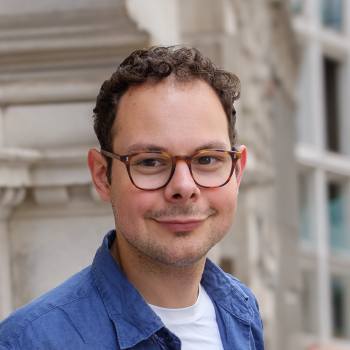
Marc Pabst
Ph. D. Student / Research Assistant
I obtained a bachelor’s degree in psychology before pursuing my MSc. in Cognitive Neuroscience at the Donders Centre for Cognitive Neuroimaging. My research focus has primarily been on perception, initially exploring auditory and somatosensory signal processing before shifting my attention to vision.
I’m a PhD student supervised by Tessa Dekker and John Greenwood, focusing on developing innovative methods to evaluate visual acuity in those with early-onset retinal dystrophies like Leber congenital amaurosis – a rare and debilitating eye condition causing severe vision loss shortly after birth. To contribute to the advancement of treatment options, I use neuroimaging methods and advanced digital processing techniques to investigate the impact of these diseases on the visual system and explore how novel therapies can rescue and restore vision.
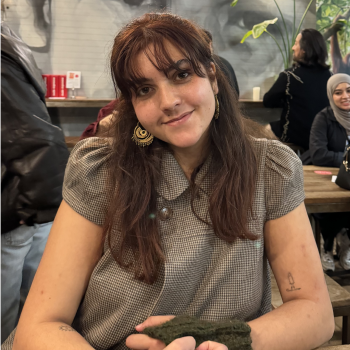
Lexie Turner
Research Assistant
I am a Research Assistant in the Child Vision Lab, working with Dr Roni Maimon-Mor, looking at sensory deprivation due to visual impairment and the effect on cognition and neuroplasticity.
I have a background in cognitive psychology and cellular neuroscience. I undertook my undergraduate degree in Experimental Psychology at the University of Oxford, and in 2025 I completed my Master’s degree in Clinical Neuroscience at UCL, where I studied the common risk genes and molecular mechanisms in Alzheimer’s Disease and age-related Macular Degeneration. I have a particular interest in understanding the effect of socioeconomic disparity on disease presentation, and am interested in studying under-represented groups to investigate the differences in biomarkers and rate of cognitive decline for age-related cognitive diseases.
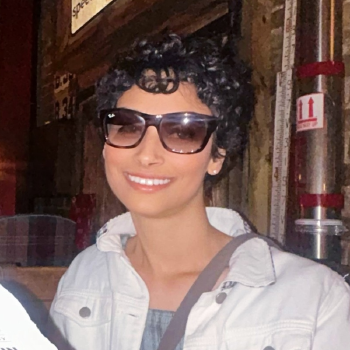
Shah Moore
Research Assistant
I’ve been long fascinated by how perception shapes broader cognition. During my BA in Experimental Psychology at Oxford, I explored how conscious visual experience contributes to semantic knowledge. For instance, what can someone born without vision understand about colour? During my MSc in Translational Neuroscience at Imperial College London, I combined neuroimaging with concurrent non-invasive brain stimulation to investigate whether modulating visual cortex activity could influence neural markers of attention.
As a Research Assistant at UCL’s Child Vision Lab, I hope to use experimental and psychophysical approaches to study how we distinguish veridical perception from mental imagery or hallucinations, gaining insight into the interaction between higher-order cognition and sensory systems.
Beyond academia, I am an avid musician and enjoy creating digital paintings. I also have lived experience with congenital visual impairments, which both fuels my passion for visual neuroscience and encouraging others with low vision to pursue scientific careers.

Dr Pete R. Jones
Honorary Researcher
My name is Pete Jones. I am a lecturer at City, University of London, and an honorary researcher at the UCL Child Vision Lab.
I am interested in developing functional vision tests for hard to reach populations: in particular, children. I specialise in using digital technologies, such as tablets, AR/VR, and eye tracking, to make automated sight tests that are pragmatic and easy to use. I am also interested in studying how the ability to make sensory judgments improves during childhood. Please feel free to contact me, using my details listed below.
Collaborators
- Dr Marko Nardini, Department of Psychology, Durham University
- Prof Denis Mareschal, Centre for Brain and Cognitive Development, Birkbeck College
- Prof Marty Sereno, San Diego State University
- Prof Janette Atkinson, UCL Division Psychology and Language Sciences
- Prof Oliver Braddick, Dept Experimental Psychology, University of Oxford
- Dr John Greenwood, UCL Division Psychology and Language Sciences
- Dr Sam Schwarzkopf, The University of Auckland
- Prof Michel Michaelides, UCL Institute of Ophthalmology
- Prof Patrick Yu-Wai-Man, UCL Institute of Ophthalmology and Moorfields Eye Hospital
- Dr Marc Tibber, UCL Division Psychology and Language Sciences
- Prof Peter Fonagy, UCL Division Psychology and Language Sciences
- Prof Martina Callaghan, UCL Queen Square Institute of Neurology
- Prof Fred Dick, UCL Division Psychology and Language Sciences
- Prof Tamar Makin, UCL Institute of Cognitive Neuroscience
- Dr Matteo Lisi, University of Essex
- Prof Laurence Maloney, New York University
- Prof Steven Scholte, University of Amsterdam
- Dr Iris Groen, University of Amsterdam
Alumni
- Lottie Wood, UCL Great Ormond Street Institute of Child Health
- Dr Mahtab Farahbakhsh, University College London
- Aisha McLean, University College London
- Dr Imogen Large, University College London